
Eight Writer’s Notes Learned from Musical Notes
By Barbara J. Petoskey
Words and music have more in common than simply how they complement each other in song. Lessons I learned on the piano bench as a child have paid off years later on the page.
Mind the Tempo
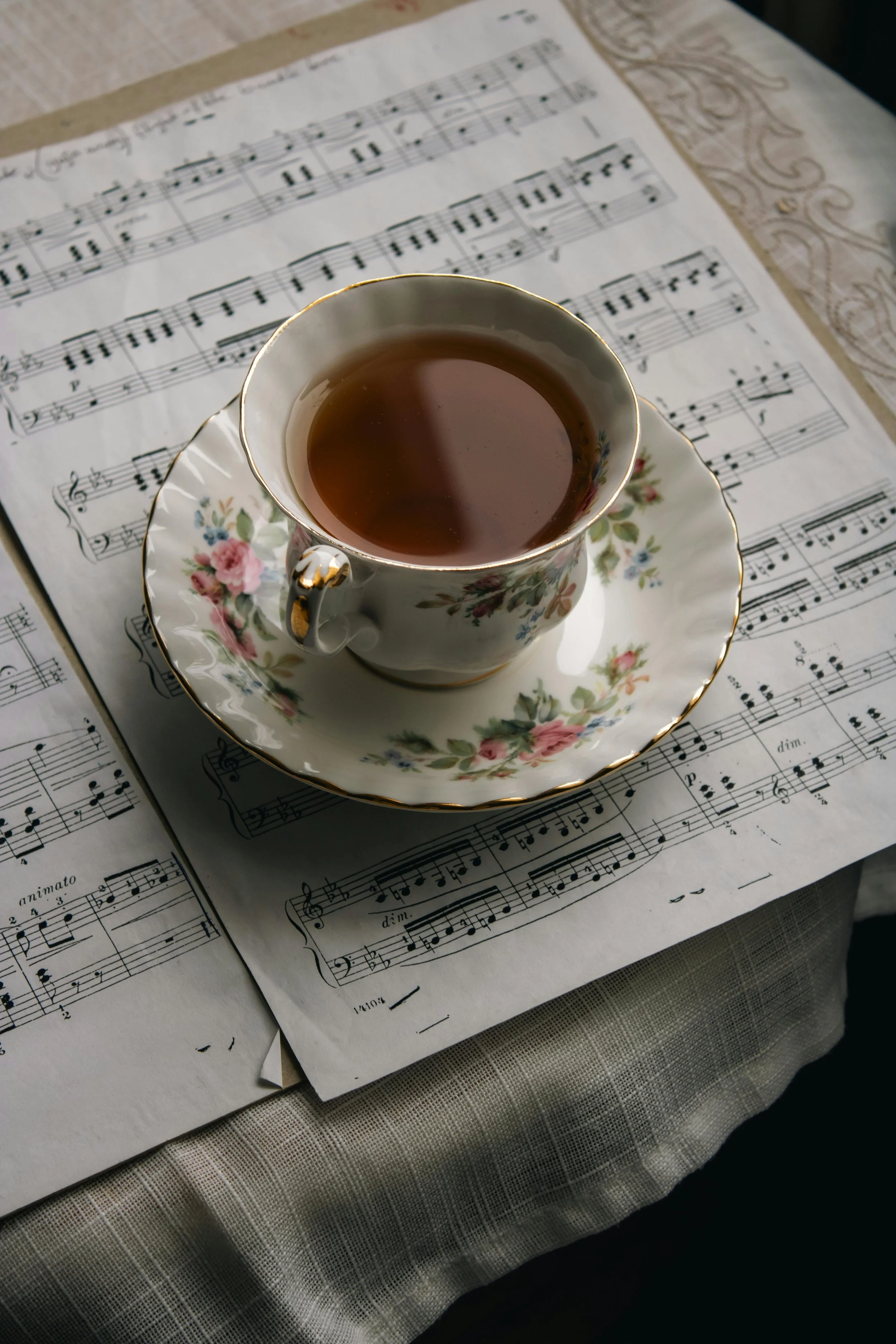
The relentless click-click-click of a metronome may be helpful for practicing finger exercises, but it’s deathly dull for an audience. Classical composers use Italian terms to signal changes in the desired pace of their music, such as lento (slow), allegro (lively), and presto (very fast). My favorite of these is rubato, literally “robbed” time, meaning the performer is free to “rob” a moment from one note and give it to the next.
Like musicians, writers of any genre can maximize emotional impact and appeal by varying the pace, from the sequencing of events down to the sentence level.
Short bursts propel action forward.
Long, atmospheric phrases lure readers into a dramatic moment and build anticipation, whether for a first kiss, the villain waiting behind the door, or the revelation inside that mysterious envelope.
As a bonus, paragraphs of variable length visually break up the mass of text. Given today’s dwindling attention spans, this inviting white space can encourage readers to keep turning pages or scrolling.
Syncopate
Musical rhythm is expressed in notation representing even-numbered fractions of time. Except when it isn’t. For the pianist, triplets squeeze three notes played with one hand into the same duration as two or four notes played with the other, creating an ever-so-slightly off-kilter surprise.
Delight your readers with comparable novelty. Paper-cutout characters become memorable, three-dimensional human beings when their distinctive personalities defy expectations. Stand a stereotype on its head. Or its elbow. What if the hard-driving detective who orders a Diet Coke at the bar isn’t an alcoholic but rather diabetic or trying to drop a few pounds before his high school reunion? Maybe when the techie goes home, instead of playing video games, she nerds out on reruns of The Golden Girls.
Riff
A skilled jazz musician will improvise a phrase or rework an established motif with a novel twist. An effective writer must be similarly nimble and open to change.
For a “plotter,” this means allowing the narrative arc to grow naturally as the characters develop rather than forcing them along the path of a preconceived outline. Themes and symbols can also morph and expose different, richer facets as the story progresses.
A “pantser” can employ the “Yes, and …” technique of a good improv comic, making sure each scene and line of dialog keys off previous events and moves the story along, building momentum like call and response.
Steal
Not plagiarism—repurposing. Just as the Christmas song “What Child Is This?” is set to the traditional English tune “Greensleeves,” Shakespeare created timeless theatre by borrowing liberally from earlier, now-forgotten plays. T.S. Eliot famously declared, “Immature poets imitate; mature poets steal,” but he went on to clarify “good poets make it into something better, or at least something different.”
In addition to countless spins on Pride and Prejudice, recent examples of “different” range from James, a reimagining of Huckleberry Finn that earned Percival Everett a Pulitzer Prize, to Bea Wolf, Zach Weinersmith’s take on Beowulf as a middle-grade graphic novel. Storytellers can mine inspiration from myths, folk tales, real-life events, or Shakespeare himself, as Jane Smiley did when she transported King Lear to the American Midwest in A Thousand Acres. Just be sure that any named fictional characters you recycle are safely in the public domain.
Create Dissonance
Melodies are typically built around standard harmonic scales, but a sprinkling of dissonance can create interesting tension when conflicting tones or individual notes rubs against each other. A melancholy tune can undercut or add depth to the message of hopeful lyrics; in Meet Me in St. Louis, by the time Judy Garland sings the last words of “Have Yourself a Merry Little Christmas,” she—and the audience—are all but in tears.
In fiction, this dissonance can be internal, external or societal. Consider the intriguing opportunities that abound when characters are forced to re-evaluate long-held beliefs, enemies or rivals must learn to cope for their mutual benefit, or a fish-out-of-water struggles to stay afloat in a strange situation.
Find Resolution
The reward of dissonance occurs when a jarring chord becomes harmonic. Aristotle identified this catharsis as the goal of Greek tragedy. For modern readers, much of the pleasure of horror or suspense lies in the release of anxiety when order is restored: the monster is slain, the bomb is defused, the mystery solved. The flip side is the Happily Ever After, where the lovers overcome obstacles or Ebenezer Scrooge buys the Christmas goose.
The writer’s challenge is to lay the groundwork, whether sprinkling clues in the reader’s path or ratcheting up the sexual tension. A satisfying resolution doesn’t have to delight, but it must feel like the organic result of all that has gone before—surprising, perhaps, yet in hindsight inevitable. No cheating. A writer may get away with an inconclusive ending, but not a solution than falls out of the-blue.
Tend to your instrument
Bringing in a tuner for my vintage piano didn’t turn me into a virtuoso, but it made playing more enjoyable. Likewise, the work of writing can be more productive or comfortable after investment in the right tools, whether that be an enlightening class, a helpful writers’ conference, or a more ergonomic chair. Simply carving out a dedicated writing space can remind you: When I’m here, I’m working, and my work is important.
Practice
The most important lesson from music is also the simplest: Skill comes from practice. Read. Write. Revise. Repeat.
Coda
If all else fails, take a break and listen to whatever type of music you enjoy. If it inspires you, dance. Or write.
Barbara J. Petoskey’s work has been collected in books including The Best Contemporary Women's Humor, The Bride of Funnyside, and This Sporting Life and appeared in publications such as Cat Fancy, Writer's Digest, Words & Sports, WOW! Women on Writing, and previous issues of Author Magazine. She has written frequently online about women’s history and the history of film.