
The Four Elements of Folktales: A Framework for Crafting Meaningful Stories
By Samuel Peters
Why Folktales Still Matter
Every writer knows the power of a good story. But what makes certain stories stick with us for centuries? The answer might lie in an ancient storytelling structure that's as relevant today as it was a thousand years ago.
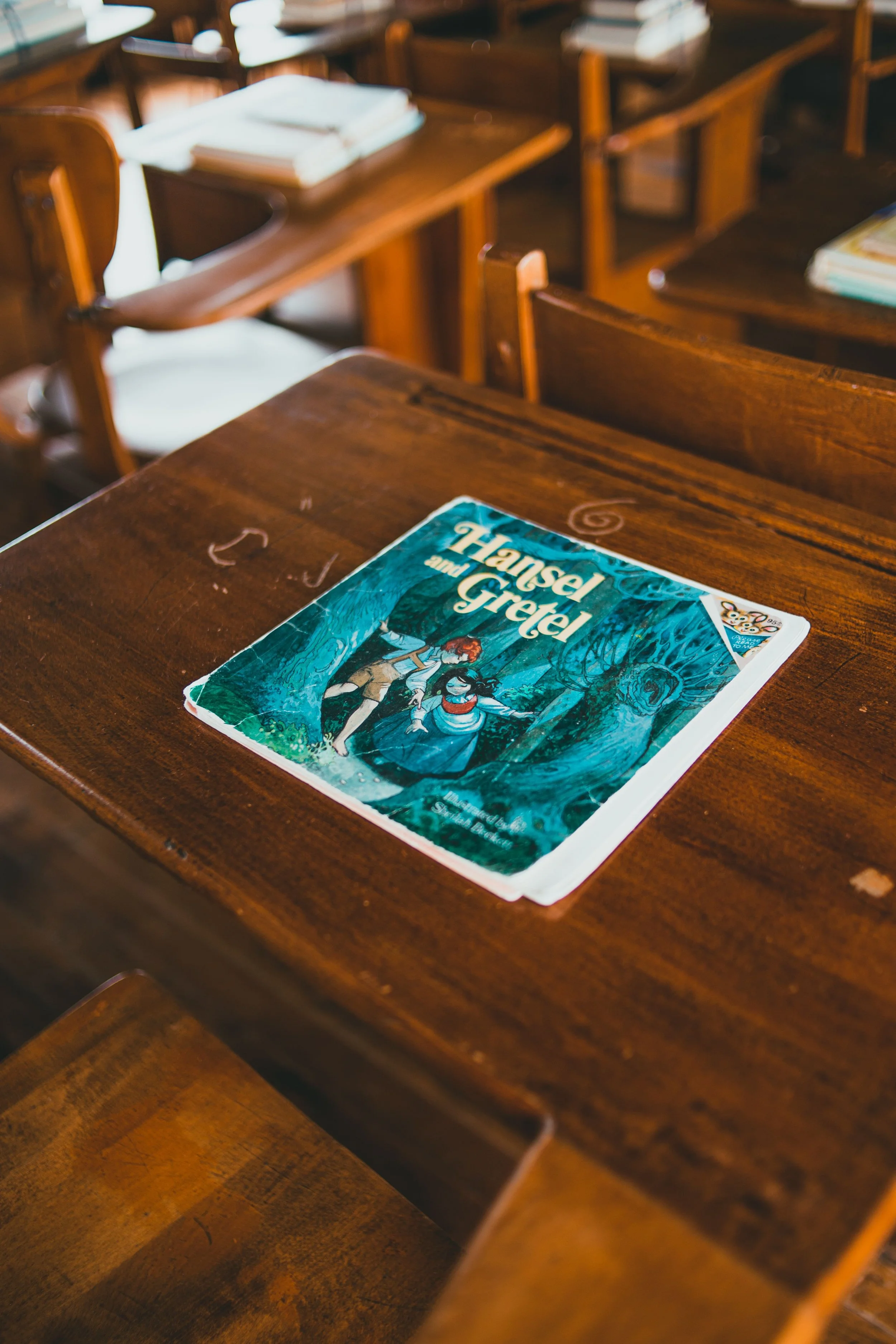
Fantasy author and folklorist Terri Windling once observed that we keep returning to these old stories because they're not really about fantasy at all; they're about real life. We've all encountered metaphorical wolves at our door, all faced impossible trials.
Folktales solved a problem writers still struggle with: how do you show someone wrestling with their conscience? They externalized internal conflict. The demons we battle aren't metaphorical; they're actual demons. And the test of character is a literal trial with life-or-death stakes.
The Four-Element Framework
After studying dozens of folktales from Welsh, English, German, and other traditions, a pattern emerges. Most folktales are built on four core elements that work together to create a complete dramatic arc.
1. The Virtue
At the heart of every folktale is a quality worth possessing, something that makes a person good, whole, or worthy. This might be courage, wisdom, generosity, prudence, honesty, or compassion. The story exists to explore what this virtue looks like in action and what happens when it’s absent.
Robin Hood, for instance, embodies justice. He doesn’t just talk about fairness; he actively redistributes wealth stolen from the poor. The entire legend revolves around testing and demonstrating this single virtue in various scenarios.
The key is specificity. “Goodness” is too vague. “Speaking truth even when it costs you” is actionable and testable.
2. The Character Flaw
Here’s where it gets interesting: your protagonist must lack the very virtue the story explores. This creates immediate dramatic tension. A person without prudence is reckless. Someone lacking compassion is cruel. A character without courage is cowardly.
The flaw manifests in behavior. Consider the young man who dismisses every warning about the dark forest, convinced that danger is something that happens to other people, never to him. Or think of the woman so consumed by mirrors and admiration that she can’t see the people around her wilting from neglect.
Interestingly, a virtue taken to its extreme can become a flaw. The person who values honesty above all else might destroy a friendship by announcing every critical thought. The brave soul who never hesitates might confuse courage with foolishness. The careful planner might spend so long weighing options that opportunities slip away entirely.
3. The Host of the Challenge
This is the genius of folktales: instead of having your character simply decide to change, an external force appears to make them change. The host is usually a creature, spirit, or magical being that catalyzes the entire conflict.
Think of the host as nature personified; powerful, unpredictable, neither wholly good nor evil. They reward virtue and punish vice, but not in a simple, Sunday-school fashion. They’re chaotic, mysterious, sometimes even playful in their cruelty.
The Green Knight from Arthurian legend is a perfect example. He appears at Camelot on New Year’s Eve with a strange proposition: strike him with his own axe, and in one year, he’ll return the blow. When Sir Gawain beheads him, the Green Knight simply picks up his severed head and reminds Gawain of their bargain. The knight embodies Gawain’s inner question: “Am I truly virtuous enough to call myself a knight?”
The host exists at the intersection of the protagonist’s flaw and the virtue they need to develop. A greedy character might encounter a beggar who turns out to be a powerful fairy in disguise. A cowardly character might be forced to face a dragon. A dishonest character might meet a creature who can see through every lie.
4. The Challenge Itself
The challenge is the concrete test; the actual situation the host creates that forces the protagonist to either demonstrate virtue or fail spectacularly.
Good challenges are visual and specific. They create memorable images that burn themselves into our imagination. Picture the farmer’s offering left at the forest edge each night, steam rising from the bowl in the cold dawn air. Imagine standing before an ancient chapel made of living vines, knowing that inside waits something that will test everything you claim to be.
The challenge should have clear stakes and a binary outcome. Either you’re generous or you’re not. Either you keep your word or you don’t. Either you face your fear or you flee.
Here’s the crucial part: the challenge puts the character’s flaw on full display. An impulsive character racing through an enchanted maze will make rash decisions that lead them deeper into danger. A stingy character refusing to share food might find their crops mysteriously failing. The external conflict is a direct manifestation of the internal flaw.
A Case Study: The Green Knight
The 2021 film “The Green Knight” brilliantly demonstrates this structure across multiple challenges. Gawain begins as an unvirtuous man playing at knighthood. Throughout his journey to meet the Green Knight and fulfill his oath, he encounters a series of hosts who test different chivalric virtues.
• A beggar tests his generosity—Gawain gives only a single coin, the bare minimum.
• A ghostly woman tests his courtesy—he responds with rudeness, demanding to know what he’ll gain from helping her.
• The lady of a castle tests his chastity—he fails, giving in to her seductions.
Each failure adds weight to the central question: Is Gawain truly a knight, or just someone wearing the costume? What makes the film so effective is that these aren’t random obstacles, they’re all facets of the same internal struggle. Gawain must confront who he really is versus who he pretends to be.
Applying This to Your Own Writing
You don’t need to write fairy tales to use this framework. It works for literary fiction, horror, thrillers, even romance. Here’s how to apply it:
Start with the virtue. What quality do you want to explore? Not “good vs. evil” but something specific: the courage to admit you’re wrong, the wisdom to know when to let go, the honesty to face an uncomfortable truth about yourself.
Create a flawed protagonist who lacks this virtue. Show their flaw through action. If your character lacks self-control, don’t just tell us they’re impulsive—show them making a rash decision in the opening scene that sets everything else in motion.
Introduce a host who embodies the protagonist’s inner conflict. This doesn’t have to be a literal monster. In contemporary fiction, it might be a person, a situation, or even an opportunity that forces the protagonist to confront their flaw.
Design a challenge that tests the virtue. Make it concrete and visual. What does your protagonist have to do? What choice must they make? What will it cost them?
The beauty of this structure is that it keeps your story focused. Every scene should either reveal the flaw, introduce the host, or present the challenge. There’s no room for meandering subplots that don’t serve the central question.
Success, Failure, or Ambiguity?
Traditional folktales often end with clear-cut victories or defeats. The hero learns their lesson and is rewarded. The villain refuses to change and is punished.
But modern stories can be more nuanced. “The Green Knight” ends ambiguously, with an interpretation that can go either way depending on what you believe about Gawain’s final choice. Both readings are valid, and both offer insight into the nature of honor and fear.
Sometimes failure is more interesting than success. A character who refuses to grow, who clings to their flaw even as it destroys them, can tell us just as much about the virtue in question. We learn what prudence means by watching someone crash and burn from recklessness. We understand compassion by witnessing cruelty’s consequences.
A Final Example: The Welsh Bucca
Consider the Welsh folktale of the Bucca, a woodland spirit who helps farmers with their chores if rewarded with milk. When the farmers prosper, they grow complacent; a new maid forgets to leave the offering. The Bucca, offended, ruins their crops and undoes all their work.
The virtue here is gratitude and respect for forces beyond our control. The flaw is taking things for granted. The host is the Bucca—unpredictable, helpful when honored, vengeful when ignored. The challenge is simply remembering to leave the bowl of milk, a small act of acknowledgment that separates prosperity from ruin.
It’s a deceptively simple story that carries a profound message about respect, and the danger of assuming the world owes you anything.
Why This Framework Works
We live in an age of complex, morally ambiguous storytelling. Anti-heroes dominate prestige television. Literary fiction prides itself on refusing easy answers. This is good—the world is complicated, and our stories should reflect that.
But there’s still value in the folktale’s clarity. By externalizing internal conflict, by creating hosts who force protagonists to confront their flaws, by designing challenges that make abstract virtues concrete, we give readers something to hold onto.
These stories work because they acknowledge a fundamental truth: we are all being tested, all the time. Life presents us with challenges that reveal who we really are. We encounter people and situations that force us to choose between our better and worse natures.
Folktales simply make this visible.
What virtue are you exploring? What flaw does your protagonist have? Who or what will force them to confront it? And what specific challenge will test whether they can change?
Samuel Peters is a freelance writer specializing in culture and history. His work has appeared in Kentucky Monthly Magazine, where he explored historic bourbon mansions, and RVA Magazine, where he delved into the storied past of Richmond's Hollywood Cemetery. A regular contributor to Writers Weekly and beyond his magazine work, he is developing two novels, further showcasing his passion for storytelling across both journalism and long-form fiction.