
Sometimes You Have to Edit Out Your Mom
By Karen Wilfrid
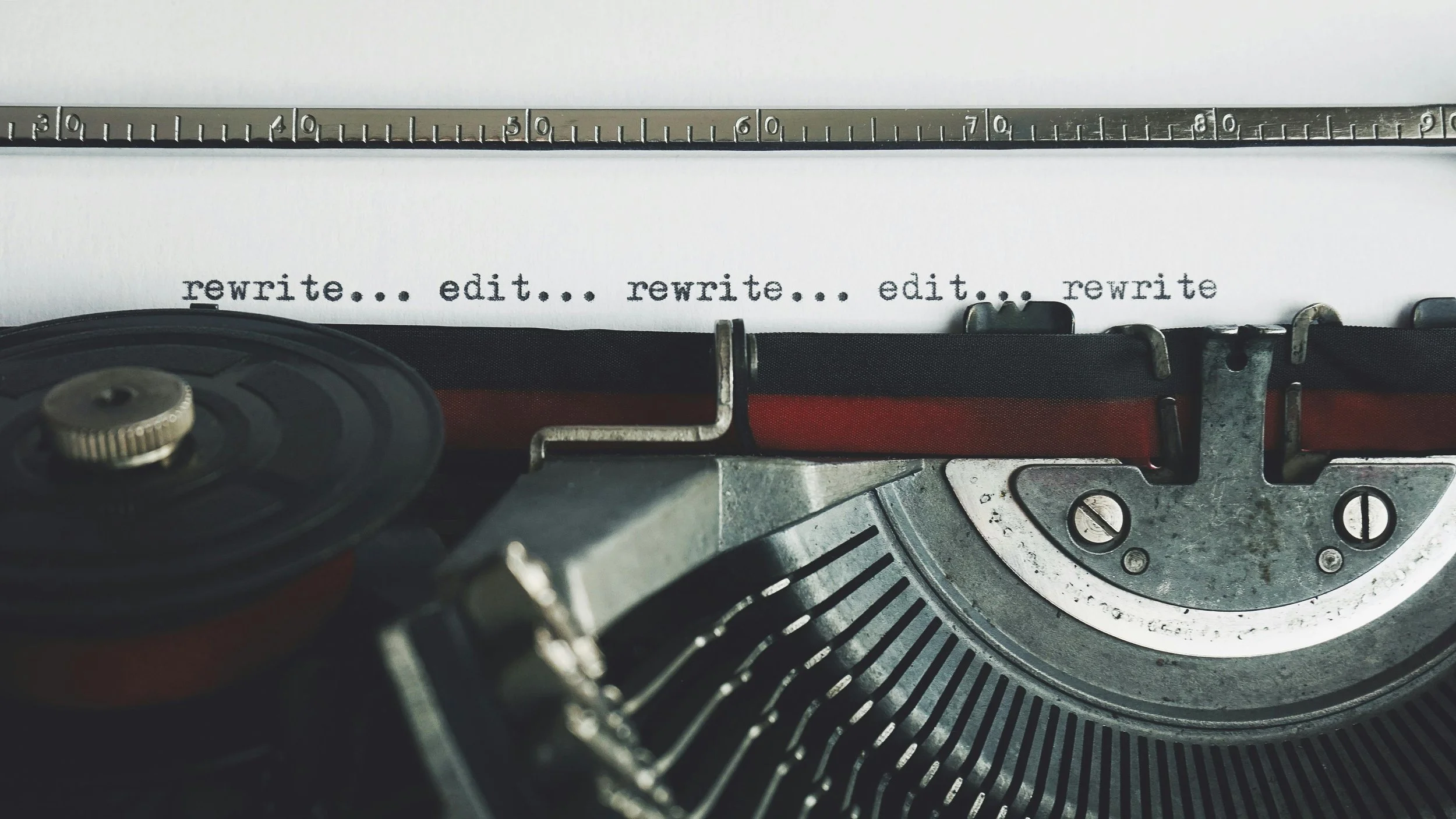
Few of us make it through a creative writing education without being told to “kill your darlings”—to excise even the cleverest turn of phrase or most exquisitely crafted sentence if it doesn’t serve the overall piece. In my career as a writer, I’ve grown accustomed to making such cuts. Sometimes it even feels gratifying: It lets me believe that I am honing my work toward some perfectly sculpted, final version. I wouldn’t choose “killing” to describe the experience—but maybe I’m not the one to ask. I’m not the one being cut. For that, I would have to ask my mom.
My mom is a lovely woman. Warm, compassionate, and generous, she was a Protestant pastor for forty years and a loving parent to my brother and me. She strikes up conversations with strangers; she helps newts make their annual migration across New Hampshire roads by moonlight; at seventy, she swam a mile and a quarter across a lake to raise money for hospice care. My mom is the one I go to for advice, for hugs, and for the best homemade granola. I love my mom.
Which is why it stinks to edit her out of my writing.
The first time I edited out my mom was also my first adult publication: an essay about Book Expo 2018, where I met my author idol, Barbara Kingsolver, in a bathroom. A key thread of the original essay was how, starstruck after the chance encounter, I had called my mom, who had first cultivated my love for Kingsolver’s books. My mom had been on a silent retreat in Connecticut and had to crouch inside a closet to take the call.
The editor loved my pitch but informed me that the word limit was 750; my essay was just under 2000. With my deadline the next day, I stayed up late, determined to trim it down. A series of smaller sacrifices proved insufficient—until I saw the inevitable solution.
My mom understood.
The second time was more recent, in a piece for WBUR’s Cognoscenti. In the essay, I wrote about seeing Les Misérables: School Edition and how stunned I was by the young cast, which included a former student of mine. My mom sat beside me for that performance, sharing my tears and awe; in one of our most treasured mother-daughter traditions, we’ve seen the show together thirteen times. As I prepared the piece for submission, my writing group gave me tough feedback: This essay can be about you and your student, or you and your mom. Not both.
“Wait a minute,” my mom said when I called her apologetically with the news. “Why do I keep getting cut?!”
She has reason to feel slighted. She, after all, is the one who gave me the gift of language. (Not to mention the gift of life.) Before I even knew how to write, she would hold the pen while I narrated. She comforted me in my disappointments—like learning that the online poetry contest I’d “won” was, in fact, a scam—and trumpeted my successes to friends, family, and the woman who changed next to her in the locker room at the Y. When I had a story published in my college literary magazine, I grabbed a stack from the table outside the dining hall. “Why do you need so many?” my roommate asked.
“For my mom,” I replied. Didn’t everyone’s mom request at least ten copies of their work?
Despite her full-throated support, my mom didn’t always see very much of what I wrote. As a teenager, I became more inhibited about sharing my writing, scribbling furtively in notebooks that I showed no one. Even in adulthood, I only shared my completed novel manuscript with her after she slipped on ice and broke her ankle. My dad sent a video of her rolling down the grocery store aisle on a knee scooter; it looked so sad that when I next visited, I handed her my laptop and said, “Here you go.”
“Are these the lengths I have to go to?” she asked, her foot elevated on the living room couch.
My mom’s opinion matters a lot to me. Like most people, I want my mom to be proud of me, to approve of me—to keep loving me. That wish hovers in the back of my mind as I write. Hovers in most writers’ minds, I imagine, even if it isn’t literally “Mom” that they’re thinking of. Is this good enough? Am I good enough? Editing out my mom—disentangling from the long reach of her influence—was easier, for a time, when I didn’t have to worry about her reading what I had written. Today, I enjoy sharing my work with my mom, even if I still hand it over with some apprehension. In addition to bringing us closer, it has professional benefits for me. When my first novel came out in 2023, I was mortified to go to a bookseller and ask if they would consider carrying my book. Not Mom! Just last week, she pushed my book on a fellow bookstore patron: “You know what YOU would like…” I call her my publicist, and she jokes, “Why am I not getting paid?”
When we choose our own words, we define ourselves; we separate ourselves from those who raised and defined us first. At times, we find ourselves bending toward their will, but we strive toward our own expression. We carefully articulate our truest meaning; we silence the inner voice that fears rejection. In this way, the act of writing is precisely, inherently, about editing out your mom—even if the effort is ultimately futile. My mom, after all, spoke and sang me the first words I heard, the ones I would later use to create stories. There is nothing I could write that would not, in some way, be shaped by her.
Including this. This one, darling Mom, I couldn’t have written without you.
Karen Wilfrid is an author and educator based in Newton, Massachusetts, where she specializes in fiction, essays, and teaching seventh graders the finer points of comma usage. Her debut novel, JUST LIZZIE, was published by HarperCollins-Clarion in 2023; her essays have appeared in HuffPost, Electric Literature, Publishers Weekly, and other publications. Learn more at www.karenwilfrid.com or follow her at k-wilfrid.bsky.social.