
The Right Word: A Writer's Guide to Building a Vocabulary Worth Having
By Samuel Peters
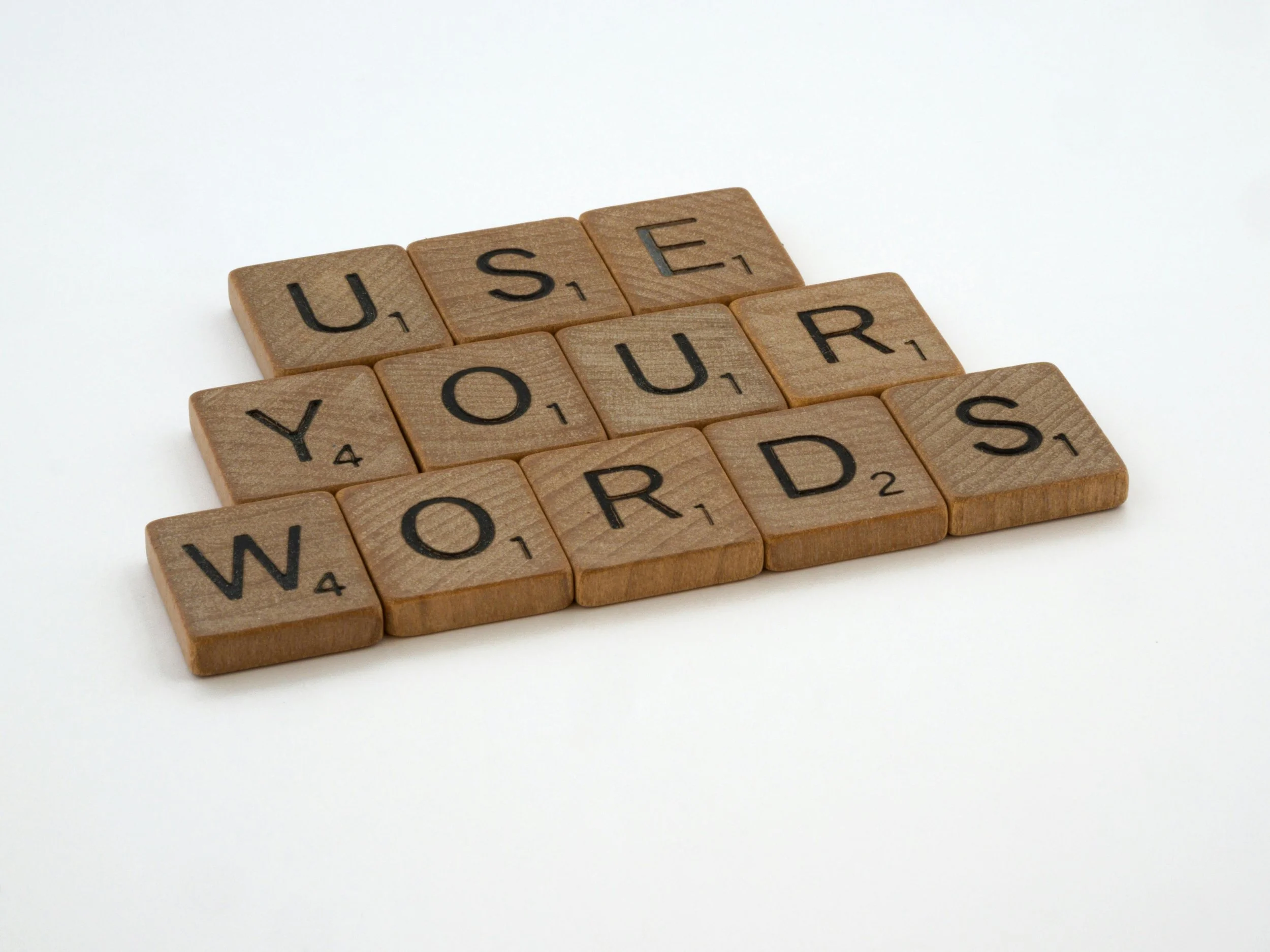
"All of us possess a reading vocabulary as big as a lake but draw from a writing vocabulary as small as a pond."
Roy Peter Clark wrote that in Writing Tools, and it names something most writers feel but rarely examine. The words are there; accumulated through years of reading, conversation, and education. They simply don't come to hand when a sentence needs them. And so, we reach for what's close rather than what's right, and the sentence works, but it doesn't sing.
That gap between the word you reach for and the word you need is a vocabulary problem, in the sense of not having built the right ones into genuine, ready possessions. A writer's vocabulary isn't a trophy case. It's a working tool, and like any tool, it gets better with deliberate maintenance.
Here is how to do that maintenance.
Precision first, volume never.
The common misconception is that a strong vocabulary means a large one; that the goal is to accumulate unusual words and deploy them generously. It isn't. The goal is precision: having the specific word available when the specific word is what the sentence needs.
Daniel Wallace illustrates this in Big Fish. He could have described his character as emotionally guarded, closed off, hard to reach. Instead: "He's lived his whole life like a turtle, within an emotional carapace that makes for the perfect defense: there's absolutely no way in." The turtle simile explains "carapace" to any unfamiliar reader. But using "carapace" rather than "shell" is the difference between a sentence that describes and one that lands. The specificity does something the general word cannot.
This is what vocabulary building is actually for; not to impress, but to mean what you say with more accuracy. Not long ago, many writers didn't know the color of heather, that sconces were a type of wall fixture, or what a bandolier was. These are the specific names of specific things and knowing them is the difference between writing that gesture and writing that place.
Read with intention. Then go further.
Reading is the most natural vocabulary builder there is, and also the most passive. Encountering a word in context gives you its meaning in the moment. It rarely gives you the word for keeps.
The remedy is a vocabulary journal: a practice of deliberately making words yours rather than letting them pass. When you encounter a word worth keeping, record five things: the original sentence you found it in, the dictionary definition, its etymology, a recent real-world usage, and a practice sentence you write yourself.
Take the noun "vellum", a fine parchment originally made from calf skin, etymologically related to "veal."
Encountered in a Paolo Bacigalupi short story: "The ink went to lovers' notes, a syrup-sweet filigree to the protestations of devotion that suitors spilled on vellum." That image is what made the word worth keeping.
The discipline the journal demands is selectivity. Not every unfamiliar word earns an entry, only the ones you can genuinely imagine using.
Rote learning works. Use it.
Flashcards have a bad reputation among people who have never seriously needed to learn anything. For vocabulary acquisition, they work. Platforms like Quizlet offer thousands of ready-made sets built around SAT and GRE word lists.
More durable than any list is structural knowledge of how words are built. Latin roots, prefixes, and suffixes turn each new word into a partial lesson in several others. Ante means before. Bellum means war. "Antebellum" resolves itself and so, by association, do "antecedent" and "belligerent." Word-a-day apps occupy a humbler but useful place: one word, one definition, one example sentence, each morning. Not enough to overwhelm. Enough to accumulate.
Learn the language your story speaks.
General vocabulary will carry a story only so far. Every world a writer builds—every field, profession, subculture, or era—comes with its own native tongue, and fiction that enters that world without learning it tends to show the seam.
A writer who uses "clip" and "magazine" interchangeably when writing about firearms has already lost every reader who knows that the clip loads the magazine, not the gun directly. One wrong word, and the illusion cracks. The same is true of medicine, architecture, music, law—any domain with its own precise terminology.
The solution is targeted research that pays attention to vocabulary, not just fact. When you read inside a specialized field, notice the words your sources reach for and the contexts in which they use them. Douglas Preston and Lincoln Child demonstrate this in their techno-thriller Relic, where a scientist prepares a sample: "She picked up the first plant with tweezers, slicing off the top portion of the leaf with an X-Acto knife. In a mortar and pestle, she ground it up with a mild enzyme that would dissolve the cellulose and lyse the cells' nuclei, releasing the DNA." You don't need biology to follow the procedure. But "cellulose," "lyse," and "nuclei" tell you the character belongs in that lab. Specialized vocabulary, used this way, doesn't exclude the reader; it persuades them.
Keep a word bank. Keep a hit list.
Even a vocabulary deliberately built tends to underperform in practice. A word bank closes that gap: a running list of words you know but rarely use. Squelched. Weltered. Gossamer. Lurid. Promontory. Not new acquisitions, but old ones pulled back into circulation. When a sentence feels flat and the obvious word isn't pulling its weight, the word bank is where you look.
Then keep the opposite: a word hit list. This captures the words you use too much—filler words like "just," "very," and "that," which can usually be cut outright, and the more distinctive words you've leaned on twice in the same manuscript. "Cacophony." "Susurrate." "Maladroitly." Used once, these can be exactly right. Used twice within a few chapters, they become a tell.
Ben Blatt, in Nabokov's Favorite Word Is Mauve, tracked the signature words of famous authors, what he calls "cinnamon words," named after Ray Bradbury's disproportionate attachment to "cinnamon."
For Agatha Christie: "inquest," "alibi," "frightful."
For Toni Morrison: "messed," "navel," "slop."
Salman Rushdie and Dan Brown were each found repeating the same clichés; "the last straw," "full circle" across multiple books. A cinnamon word isn't always a problem. A recycled cliché is. The hit list catches them.
Check what you think you know.
Vocabulary growth runs in two directions: forward into new words, and backward into corrections. A surprising number of word-choice errors come not from ignorance but from assumption; the word that sounds right, that feels right, that has been used confidently for years but means something different than believed.
"Nonplussed" is the most common example. In American English, it has drifted colloquially toward meaning unbothered, cool, unimpressed. Its actual definition is nearly the opposite: so surprised or confused as to be at a loss for what to say, think, or do. Rowling used it correctly: "Cedric looked nonplussed. He looked from Bagman to Harry and back again as though sure he must have misheard what Bagman had said." Writers who have been deploying it to signal detachment have been, quietly, saying the wrong thing.
The habit is simple: when a word feels right but you could not define it under examination, look it up. Not as punishment. As hygiene.
One good word beats five competing ones.
After all of this: the journals, the flashcards, the research, the banks and lists, the final lesson is restraint.
Mark Twain: don't use a five-dollar word when a fifty-cent word will do.
George Orwell: never use a long word where a short one will do.
Stephen King warns in On Writing against dressing up your vocabulary to hide embarrassment about simpler words.
All three, in their own work, used demanding and unusual language without apology because the point was never simplicity for its own sake. It was fitness.
Samuel Peters is a freelance writer specializing in culture and history. His work has appeared in Kentucky Monthly Magazine, where he explored historic bourbon mansions, and RVA Magazine, where he delved into the storied past of Richmond's Hollywood Cemetery. A regular contributor to Writers Weekly and beyond his magazine work, he is developing two novels, further showcasing his passion for storytelling across both journalism and long-form fiction.